

Midea Top Load Washer Error Codes Explained
When your Midea top-load washing machine suddenly stops mid-cycle and displays an error code, it can be frustrating and confusing. Fortunately, these fault codes are built-in diagnostic tools designed to help identify the source of the problem quickly.
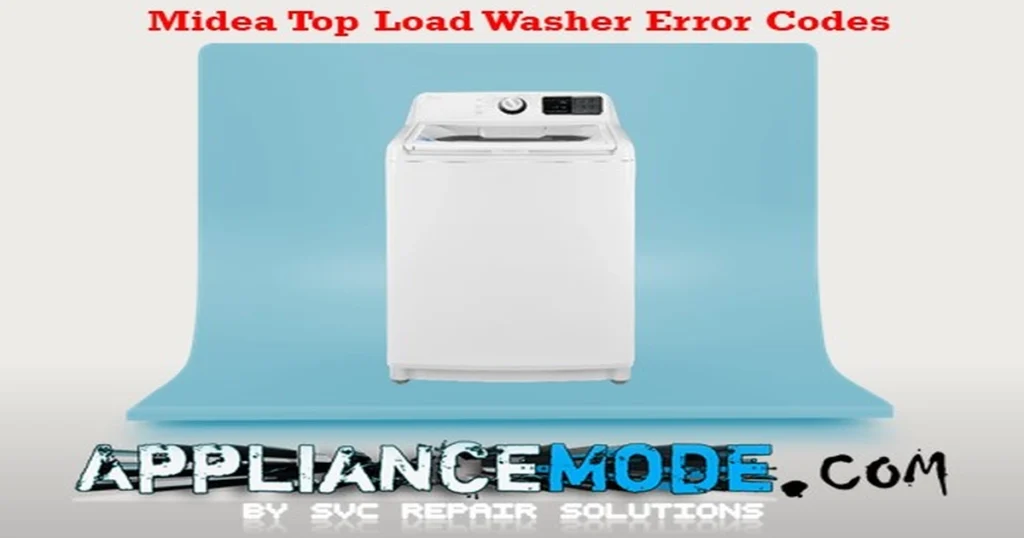
In this comprehensive guide, we’ll explain the most common Midea top load washer error codes, their causes, and the troubleshooting steps you can take before calling a technician. We’ll also provide component testing information and repair tips that can help you accurately diagnose the fault.
Before You Begin Troubleshooting
Safety should always come first when servicing any appliance.
Before inspecting or testing your washer:
- Unplug the washing machine from the electrical outlet.
- Turn off both hot and cold water supplies.
- Wear appropriate safety equipment.
- Avoid touching electrical components while power is connected.
- Use a properly rated multimeter when testing electrical parts.
Understanding Midea Top Load Washer Error Codes
Midea top-load washers continuously monitor critical components such as the following:
- Water inlet valves
- Drain pump
- Lid lock system
- Water level sensor
- Drive motor
- User interface
- Main control board
When a fault is detected, the washer stops operation and displays an error code. These codes help narrow down the problem and often prevent unnecessary part replacements.
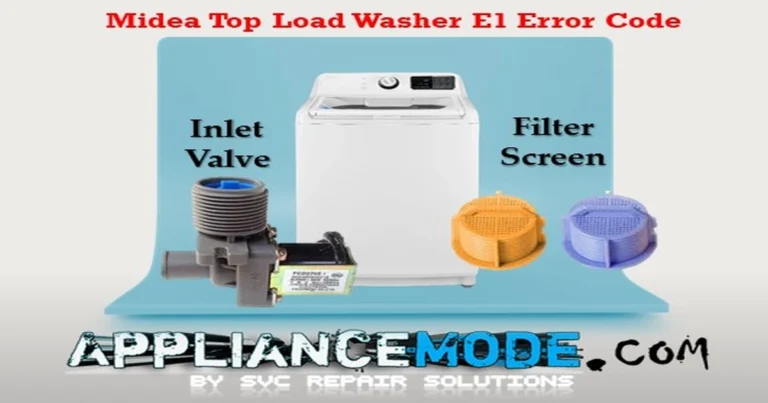
E1: Water Inlet Valve Error
The E1 error indicates that the washer cannot fill with water within the expected time.
Common Causes
- Water supply turned off
- Low household water pressure
- Kinked or blocked inlet hoses
- Clogged inlet valve screens
- Defective water inlet valve
- Faulty water level sensor
- Main control board failure
How to Fix E1 Error
1. Verify Water Supply
Make sure both water faucets are fully open.
Inspect the inlet hoses for:
- Kinks
- Twists
- Restrictions
- Freezing (in cold climates)
2. Clean Inlet Valve Screens
Sediment buildup is one of the most common causes of fill problems.
- Shut off the water supply.
- Remove the hoses.
- Clean the filter screens inside the valve ports.
3. Check Water Pressure
Most Midea washers require adequate household pressure to operate correctly.
Weak pressure can trigger filling errors even when all components are functional.
4. Test the Water Inlet Valve
Disconnect power and measure the valve coil resistance.
Typical values:
| Voltage | Expected Resistance |
|---|---|
| 120 VAC | ~1650 Ω |
| 220–240 VAC | ~3600 Ω |
Replace the valve if readings are significantly outside specifications.
5. Inspect the Water Level Sensor
A defective pressure sensor can falsely report that the tub is already full.
Check:
- Sensor hose
- Air chamber
- Electrical connections
6. Check the Main PCB
If all other components test correctly, the control board may not be energizing the valve.
E2: Drain Pump Error
The E2 error appears when the washer cannot remove water within the programmed drain time.
Common Causes
- Blocked drain hose
- Clogged drain filter
- Failed drain pump
- Defective retractor assembly
- Faulty pressure sensor
- Main board failure
How to Fix E2 Error
Inspect the Drain Hose
Check for:
- Kinks
- Pinched sections
- Debris blockage
Also inspect the household drain connection.
Clean the Drain Pump Filter
A blocked filter can prevent proper draining.
Common obstructions include:
- Coins
- Buttons
- Hairpins
- Lint buildup
Test the Drain Pump
Measure motor resistance:
| Voltage | Resistance |
|---|---|
| 120 VAC | ~16 Ω |
| 220–240 VAC | ~140 Ω |
Replace the pump if readings are abnormal.
Inspect the air chamber.
Pressure sensor problems can sometimes mimic drain failures.
Clean any debris from the air chamber and pressure hose.
Check the main board.
If the drain pump never receives voltage, the PCB may be defective.
E3: Lid Open Error
The E3 code indicates that the washer believes the lid is open.
For safety reasons, spinning cannot begin until the lid is securely closed.
Possible Causes
- Lid not fully closed
- Damaged lid switch
- Faulty lid lock assembly
- Wiring problem
- Defective main board
Troubleshooting Steps
Check the lid.
Ensure:
- The lid closes completely
- No laundry is trapped
- The strike aligns properly with the lock
Test the Lid Switch
Use a multimeter to verify continuity.
Replace the switch if it does not change state when operated.
Check the lid lock assembly.
Measure the lock solenoid resistance.
Typical value:
| Component | Resistance |
|---|---|
| Lid Lock Solenoid | ~65 Ω |
Replace if defective.
E4/E5: Unbalanced Load Error
These codes indicate excessive vibration during the spin cycle.
The washer stops spinning to prevent damage.
Common Causes
- Uneven laundry distribution
- Single heavy item
- Washer not level
- Worn suspension rods
- Damaged balance ring
- Defective vibration switch
Solutions
Redistribute the Load
Large items such as:
- Blankets
- Comforters
- Towels
often bunch together and create imbalance.
Level the washer.
Use a spirit level and adjust all four leveling feet.
Inspect Suspension Rods
Replace worn or weak suspension rods.
Check the balance ring.
Look for leaks or damage around the drum balance ring.
Test the Safety Switch
Verify continuity using a multimeter.
F2/C9: EEPROM Error
This fault indicates corrupted memory data on the main control board.
Possible Causes
- Software corruption
- Failed EEPROM chip
- Defective PCB
Solutions
Reset the washer.
Disconnect power for 10 minutes.
Reconnect and test operation.
Replace the main control board.
If the error returns, PCB replacement is usually required.
F3: Water Level Sensor Error
The washer cannot correctly determine the water level inside the tub.
Common Causes
- Faulty pressure sensor
- Blocked pressure hose
- Clogged air chamber
- Wiring issues
- Main board failure
Troubleshooting
Inspect the Pressure Hose
Look for:
- Kinks
- Cracks
- Disconnections
Clean the air chamber.
Detergent residue and debris can clog the chamber.
Test the Pressure Sensor
Check:
- Capacitance
- Resistance
- Supply voltage
Refer to your model-specific service manual for exact values.
CL: Child Lock Activated
The CL display is not a fault code.
It simply indicates that the control panel has been locked.
How to Turn Off Child Lock
On most Midea models:
- Press and hold:
- Soil Level + Temp for approximately 3 seconds.
- The CL indicator should disappear.
Button combinations may vary by model.
C8: Communication Error
The user interface board and main control board are no longer communicating properly.
Causes
- Loose wiring
- Damaged harness
- Failed display board
- Failed PCB
Solutions
Check All Connectors
Inspect both ends of the communication harness.
Inspect the User Interface Board
Look for:
- Burn marks
- Corrosion
- Damaged connectors
Replace Defective Components
If wiring is good, replace the failed board.
FD: Lid Lock Error
Unlike the E3 error, FD specifically indicates a failure of the lid locking mechanism.
Common Causes
- Defective lid lock
- Broken latch
- Wiring fault
- Main PCB failure
How to Fix FD Error
Check the lock assembly.
Inspect for:
- Broken plastic components
- Mechanical binding
- Burnt terminals
Measure Lock Resistance
Expected value:
| Component | Resistance |
|---|---|
| Lid Lock Solenoid | ~65 Ω |
Inspect Wiring
Check for loose or damaged connectors.
Verify Control Board Operation
Confirm that the PCB is supplying voltage to the lock assembly.
Preventing Future Midea Washer Error Codes
Many washer faults can be avoided with regular maintenance.
Best Practices
- Clean inlet valve screens every 6 months.
- Inspect water hoses annually.
- Clean the drain filter regularly.
- Avoid overloading the washer.
- Use the correct detergent amount.
- Keep the washer level.
- Leave the lid open after washing to prevent mold buildup.
Frequently Asked Questions
a question.How do I reset a Midea top-load washer?
Unplug the washer for 5–10 minutes, reconnect power, and restart the cycle. Some models may require entering diagnostic mode to clear stored errors.
Why does my Midea washer keep showing E1?
The most common causes are clogged inlet screens, low water pressure, or a faulty water inlet valve.
What causes E2 drain errors?
Blocked drain hoses, clogged filters, or a failed drain pump are the most frequent causes.
Is CL an error code?
No. “CL” simply means Child Lock is activated.
Can I repair a lid lock error myself?
Yes. Many FD and E3 errors are caused by a faulty lid lock assembly, which is typically accessible and replaceable with basic tools.
Final Thoughts
Midea top-load washer error codes are designed to help you quickly identify problems before they become major repairs. While many issues—such as clogged filters, unbalanced loads, and blocked hoses—can be fixed at home, more complex faults involving control boards, sensors, or wiring may require professional service.
I am an appliance repair technician with over 35 years of experience. I help people troubleshoot appliance problems, understand error codes, and fix common issues. On ApplianceMode.com, I share free guides and useful information to help people repair their appliances.

Can I just say thank you!!!
E3 g CL would not go away on my midea top load washer. Just about every other site called for some type of disassembly. Press to buttons! You guys rock!!!
C8 error code