

Troubleshooting the LG Linear Compressor
If your LG refrigerator has stopped cooling and you suspect the linear compressor is the cause, proper diagnosis can save you from replacing expensive parts unnecessarily.
In this guide, you’ll learn how to troubleshoot an LG linear compressor, check its winding resistance, verify inverter operation, and determine whether the problem lies with the compressor, inverter PCB, or another component.
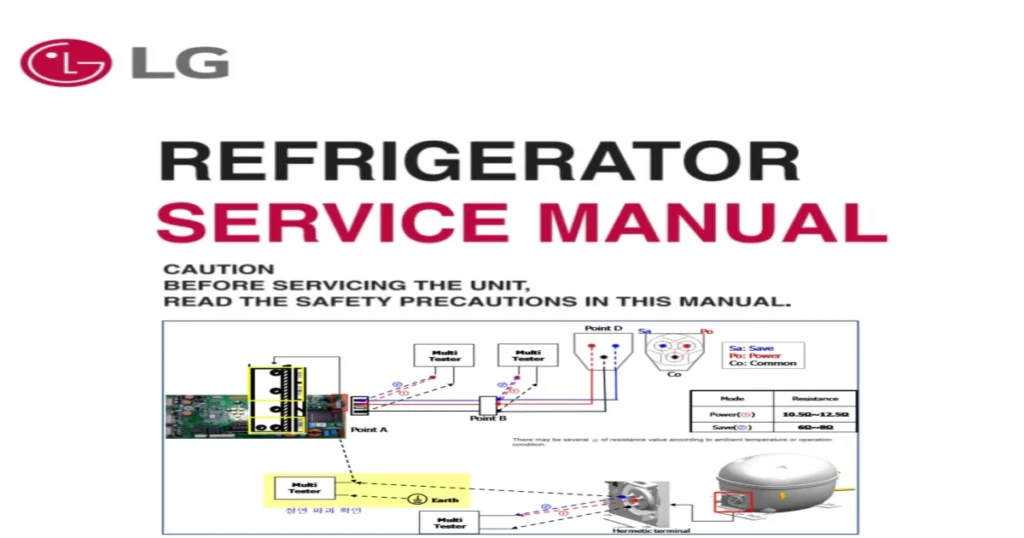
Troubleshooting the LG Linear Compressor: Common Symptoms of a Faulty Compressor
A failing LG linear compressor can cause several symptoms, including:
- Refrigerator not cooling
- Compressor never starts
- Compressor repeatedly attempts to start
- Error codes on the display
- Three-flash LED error on the main control board
- Compressor warm or hot but not cooling
Because several different faults can produce the same symptoms, it’s important to diagnose the system before replacing the compressor.
Step 1: Measure Compressor Winding Resistance
Disconnect power to the refrigerator before taking any resistance measurements.
Using a digital multimeter, measure the resistance between the compressor terminals.
For many LG linear compressors (including the FMA102NBMA), the winding resistance is typically around 5.1–6.3 Ω. Always verify the correct specification using the service manual for your refrigerator model.
If your measurements show:
- Within specification: The winding is likely intact.
- Open circuit (OL): The winding is open, and the compressor is defective.
- Very low resistance (near 0 Ω): The winding may be shorted.
- Much higher resistance than specified (such as 16 Ω or 21 Ω): This may indicate an internal winding problem or compressor failure.
Resistance testing alone cannot confirm that the compressor is good, but abnormal readings are a strong indicator of internal damage.
Step 2: Check for Control Board
If the compressor winding tests correctly but the compressor still won’t run, inspect the control system.
Check the following components:
- Main control PCB
- Compressor inverter PCB (if equipped)
- Wiring harness
- Connectors for corrosion or loose terminals
Many LG refrigerators use diagnostic LEDs on the PCB.
For example, a three-flash LED pattern often indicates that the control board attempted to start the compressor but detected a failure. Depending on the model, this may point to a compressor, inverter, or communication fault. Always verify the LED code using the service manual for your specific refrigerator.
Step 3: Verify Voltage to the Compressor
Next, determine whether the inverter is supplying power to the compressor.
Most LG linear compressors are driven by an inverter rather than a traditional start relay. During operation, the inverter outputs a variable AC voltage and frequency to control compressor speed.
If no output voltage is present when cooling is requested, the problem may be:
- Faulty inverter PCB
- Defective main control board
- Wiring issue
- Failed compressor causing inverter shutdown
Warning: Inverter outputs operate at potentially dangerous voltages. Only perform live voltage measurements if you are trained to work safely with electrical equipment.
Step 4: Inspect the Inverter
Unlike conventional compressors, LG linear compressors do not use a start relay or start capacitor.
Instead, the inverter electronically starts and controls the compressor.
Inspect the inverter for:
- Burned or damaged components
- Loose connectors
- Signs of overheating
- Water damage
- Diagnostic LED faults
If possible, follow the manufacturer’s inverter testing procedures outlined in the service manual.
Step 5: Determine Whether the Compressor Needs Replacement
After verifying:
- Correct power supply
- Proper inverter operation
- Good wiring connections
- Normal control board operation
The compressor itself becomes the most likely cause if it still fails to start.
Common indicators of compressor failure include:
- Abnormal winding resistance
- Compressor drawing excessive current
- Inverter repeatedly attempting to start the compressor
- Three-flash compressor fault codes
- Internal short or open winding
When replacing the compressor, always install the correct replacement specified for your refrigerator model.
Final Thoughts
Troubleshooting an LG linear compressor requires a systematic approach rather than replacing parts by trial and error.
Begin by checking the compressor winding resistance, then verify inverter output, inspect the control board, and confirm that the refrigerator is actually requesting cooling. Only after these tests should the compressor be considered defective.

I am a master appliance repair technician with over 35 years of experience in the field. I am passionate about helping people troubleshoot their appliances and fix common problems. My website, appliancemode.com, provides a wealth of information on troubleshooting common appliance issues and deciphering error codes. This website aims to empower people to tackle appliance repairs themselves and save money on service calls.

My reading between two prongs is 11 ohms. Is my compressor bad?
Your reading of 11 ohms between two prongs on your compressor doesn’t immediately tell us if it’s bad.
This guide, LG Inverter Refrigerator LED Blinking Error Codes (https://appliancemode.com/lg-inverter-refrigerator-led-blinking-error-codes/), is indeed a great resource if you have an LG inverter refrigerator and are seeing error codes. While it might not directly give you the ohm specifications for your compressor, it could help diagnose other issues that might seem like a bad compressor but are actually related to the inverter board or other components.