
LG Portable Air Conditioner Error Codes: Complete Troubleshooting & Repair Guide
When your LG portable air conditioner displays an error code, it’s not just a warning—it’s a built-in diagnostic system designed to help identify the source of the problem. Whether you own a standard cooling model, a heat-and-cool unit, a dual inverter system, or a Wi-Fi-enabled LG ThinQ portable air conditioner, understanding these fault codes can save time, prevent unnecessary repairs, and help restore cooling performance quickly.
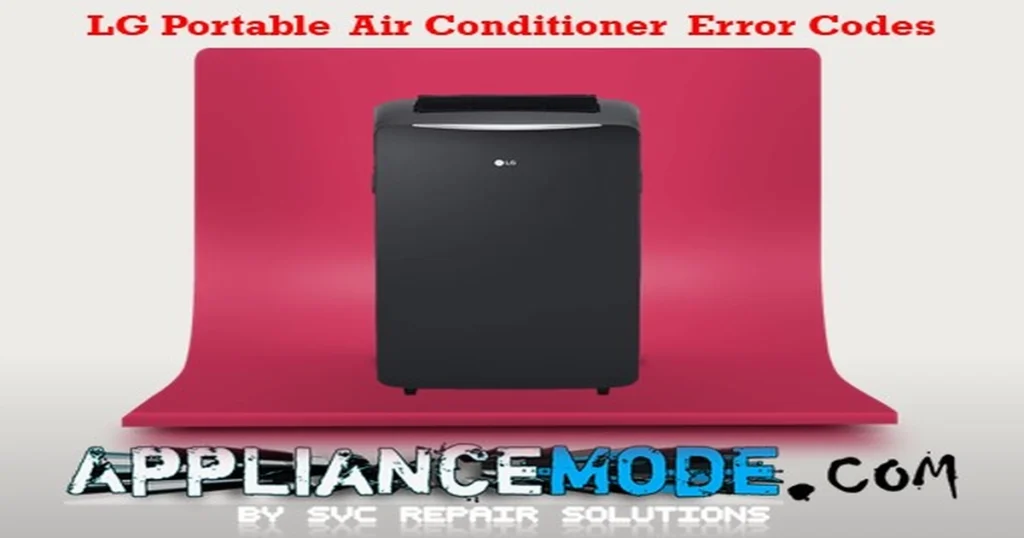
This comprehensive guide explains the most common LG portable air conditioner error codes, their causes, and the diagnostic procedures professional technicians use to identify and repair faults.
Safety First
Before performing any inspection or repair:
- Disconnect the unit from the power supply.
- Allow moving components to stop completely.
- Use proper electrical safety procedures when taking voltage or resistance measurements.
- Contact a qualified HVAC technician for sealed-system or refrigerant-related repairs.
LG Portable Air Conditioner Error Codes Explained
CH01/E2: Room Temperature Sensor Error
This error indicates that the indoor ambient temperature sensor circuit has been detected as open or shorted by the control board.
Possible Causes
- Loose or damaged sensor wiring
- Defective room temperature thermistor
- Failed main control board
Diagnostic Procedure
- Inspect the thermistor wiring harness for loose connections or damage.
- Measure sensor resistance with a multimeter.
- At 77°F (25°C), the thermistor should measure approximately 9.8 kΩ.
- Replace the sensor if resistance is out of specification.
- If the sensor tests correctly, diagnose the main PCB.
CH02/E1: Evaporator Pipe Temperature Sensor Error
This fault occurs when the evaporator temperature sensor circuit becomes open or shorted.
Possible Causes
- Damaged wire harness
- Failed evaporator thermistor
- Defective control board
Diagnostic Procedure
- Verify sensor connections at both the sensor and PCB.
- Measure the resistance of the evaporator sensor.
- Expected resistance at 77°F (25°C) is approximately 4.85 kΩ.
- Replace the thermistor if readings are abnormal.
- If wiring and sensor test correctly, suspect the control board.
CH10: Upper Fan Motor Error / CH67: Lower Fan Motor Error
These codes indicate that the control board is not receiving proper feedback from the BLDC fan motor.
Possible Causes
- Fan obstruction
- Seized motor bearings
- Failed BLDC motor
- Defective inverter or control board
Diagnostic Procedure
- Inspect the fan wheel for debris or mechanical obstruction.
- Rotate the fan manually to ensure free movement.
- Verify motor supply voltage.
- Check feedback and PWM control signals.
- Measure motor winding resistance according to service specifications.
- Replace the motor if electrical values are outside specification.
CH22: Input Current Over Error
This error is generated when compressor current exceeds the allowable operating limit.
Possible Causes
- Dirty air filter
- Restricted airflow
- Faulty fan motor or blade
- Low supply voltage
- Refrigerant overcharge
- Restricted capillary tube
- Compressor failure
- Defective control board
Diagnostic Procedure
- Clean the air filter.
- Inspect evaporator and condenser coils for contamination.
- Verify unrestricted airflow.
- Measure incoming voltage.
- Check compressor winding resistance.
- Inspect refrigerant system performance.
Technician Tip
Many CH22 faults are airflow-related. Always clean filters and coils before replacing components.
CH26: Inverter Compressor Start Failure
The inverter board is unable to successfully start the compressor.
Possible Causes
- Loose compressor wiring
- Failed inverter compressor
- Defective inverter PCB
- Main board failure
Diagnostic Procedure
- Inspect compressor connectors.
- Measure compressor winding resistance.
- Verify inverter output voltage.
- Replace the defective compressor or inverter board as required.
CH32: Compressor Discharge Temperature High
This error occurs when compressor discharge temperature exceeds safe operating limits.
Possible Causes
- Dirty condenser
- Restricted airflow
- Low refrigerant charge
- Failed discharge temperature sensor
- Compressor overheating
Diagnostic Procedure
- Clean condenser and evaporator coils.
- Verify fan operation.
- Test discharge thermistor resistance.
- Check refrigerant charge.
- Inspect compressor operating conditions.
At 77°F (25°C), the discharge sensor typically measures approximately 198 kΩ.
CH38: Low Refrigerant Pressure Error
This fault indicates that the system has detected abnormally low refrigerant pressure.
Possible Causes
- Refrigerant leak
- Restriction within the sealed system
- Faulty pressure sensor
- Defective thermistor
Diagnostic Procedure
- Inspect sensor wiring.
- Verify sensor resistance values.
- Perform leak detection.
- Repair leaks and recharge the system to factory specifications.
Important
Refrigerant repairs require EPA-certified HVAC equipment and should only be performed by qualified technicians.
CH41: Discharge Pipe Sensor Error
The discharge temperature sensor circuit has been detected as open or shorted.
Possible Causes
- Damaged thermistor
- Wiring fault
- Control board failure
Diagnostic Procedure
- Inspect wiring harness connections.
- Measure thermistor resistance.
- Replace the sensor if readings are abnormal.
- Test PCB if sensor passes inspection.
CH45: Condenser Temperature Sensor Error
The control board has detected an abnormal condenser pipe sensor reading.
Possible Causes
- Failed condenser thermistor
- Damaged wiring
- Defective control board
Diagnostic Procedure
- Inspect wiring.
- Measure thermistor resistance.
- Expected value at 77°F (25°C) is approximately 4.85 kΩ.
- Replace faulty components as needed.
CH61: Condenser Pipe Temperature Error
This code indicates that condenser temperature has exceeded programmed operating limits or has fallen outside expected values.
Possible Causes
- Refrigerant leak
- Refrigerant restriction
- Faulty condenser thermistor
- Poor airflow
Diagnostic Procedure
- Inspect the airflow system.
- Verify condenser cleanliness.
- Test temperature sensors.
- Evaluate refrigerant pressures.
CH62: Inverter Heat Sink Overtemperature Error
The inverter module heat sink temperature has exceeded approximately 212°F (100°C).
Possible Causes
- Restricted airflow
- Dirty filter
- Failed cooling fan
- Refrigerant system restriction
- Defective inverter board
Diagnostic Procedure
- Clean air filters.
- Verify fan operation.
- Clean heat exchanger surfaces.
- Inspect inverter board cooling path.
- Replace the inverter PCB if overheating persists.
LG Portable Air Conditioner Status Codes
Not every display code indicates a malfunction. Some codes simply report operating conditions or enabled features.
CL: Child Lock Enabled
The control panel is locked to prevent accidental operation.
Solution
Disable Child Lock according to your model’s user manual.
Co: Condensation Removal Mode
Indicates that the automatic condensation evaporation function is active.
This is normal operation and does not require repair.
CP/PO: Cooling Power Mode
The unit is operating in high-performance cooling mode. This notification is informational only and does not indicate a fault.
FL/P2 Water Tank Full Error
The internal condensate collection tank has reached its maximum level.
Possible Causes
- Full drain reservoir
- Faulty float switch
- Defective splash motor
Troubleshooting
- Turn off the unit.
- Drain water from the lower drain port.
- Reinstall the drain cap securely.
- Inspect the float sensor.
- Verify splash motor operation.
Final Thoughts
LG portable air conditioners include advanced self-diagnostic systems that can quickly identify sensor failures, airflow problems, compressor issues, and refrigerant system faults. Understanding these error codes allows homeowners and technicians to pinpoint failures faster and reduce unnecessary part replacements.
For electrical faults, sensor failures, and airflow-related issues, many repairs can be completed with basic diagnostic tools. However, sealed-system problems involving refrigerant leaks, compressor failures, or pressure-related faults should always be handled by a qualified HVAC professional.

I am an appliance repair technician with over 35 years of experience. I help people troubleshoot appliance problems, understand error codes, and fix common issues. On ApplianceMode.com, I share free guides and useful information to help people repair their appliances.