In this guide, we will explain the Electrolux Dishwasher i30 error code, which usually indicates a water leak or overflow protection activation. This error appears when the dishwasher’s base tray detects water where it shouldn’t be, triggering the anti-flood system to stop the appliance for safety.
Electrolux Dishwasher i30 Error Code: Understanding, Causes, and Solutions
The i30 error code on your Electrolux dishwasher usually appears when there’s an issue related to water overflow or leaks. In technical terms, the i30 error is short for “Aqua Control Error.” This means that your dishwasher’s aqua control system has detected the presence of water in the drip tray, prompting it to display the i30 fault code. Essentially, it serves as an alert mechanism, signaling the possibility of a leakage or an unwanted surplus of water in an inappropriate location.
Common Causes of Electrolux Dishwasher i30 Error Code
Let’s explain each of these factors in more detail
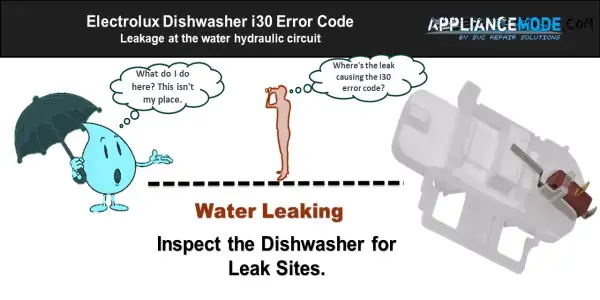
Leakage at the water hydraulic circuit: This refers to the possibility of water leaking from the hoses that supply water to your dishwasher and the drainage hoses that carry away wastewater. Any cracks, pinholes, loose connections, or damaged hoses can result in water escaping and triggering the i30 error code.
If the inlet valve becomes faulty, it may fail to shut off the water properly after it has filled the dishwasher, leading to an overflow of water that accumulates in the bottom tray.
The dishwasher door features a rubber gasket encircling its perimeter, serving as a sealing mechanism. Its primary job is to create a watertight seal when the dishwasher is in use. If this gasket is damaged, worn, or not properly seated, it can allow water to leak out during the wash cycle, causing the i30 error.
The floating sensor is designed to detect water leaks in the drip tray. If it becomes blocked by debris, moisture, or foreign objects like screws, it may give incorrect readings, leading to the dishwasher’s belief that there is excess water. A faulty float microswitch can also fail to signal the correct water level to the control system, causing the i30 fault code.
A drainage issue can result in water not being properly removed from the dishwasher during or after the washing and/or rinse cycle. This can happen due to clogs in the drainage system, such as in the drain hose or the dishwasher’s pump, which can lead to water accumulating in the bottom tray and triggering the i30 error.
Effective Solutions to Fix Your Dishwasher i30 Error Code
If you come across the i30 error code on your appliance, don’t worry. Here are the troubleshooting steps to help you resolve the issue:
Start by inspecting the drain pump filter. Ensure it is clean and free from any debris or blockages that might be hindering proper water drainage.
Examine the water tank for any blockages, leaks, or cracks. Pay special attention to the hoses connecting the dishwasher to the water supply and drain. If you notice any water dripping from the hoses, tighten the connections securely or replace the hoses if they are damaged.
The float switch is a critical component in detecting water leaks. Confirm that the wiring harness connecting the float switch is properly secured.
Visually inspect the float switch itself. Ensure it moves freely. Any physical damage or blockage could affect its operation.
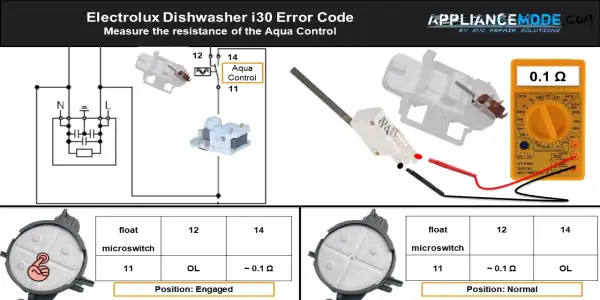
If the error persists after checking the float switch visually, use a multimeter to check the float microswitch for electrical continuity. A malfunctioning microswitch might need a replacement.
If all the above steps fail to resolve the i30 error code, it might indicate a more complex issue with the appliance’s main board. In such cases, it may be necessary to consider replacing the main control board as a final troubleshooting step.
Final Tip
The Electrolux Dishwasher i30 error code is most often caused by a water leak into the base tray, so start by checking for visible leaks around hoses, seals, and connections. Also inspect the door gasket and ensure you are using the correct detergent dosage to avoid excess foam. If water is present in the base, drying it out and fixing the leak source is essential; otherwise, the anti-flood switch may keep triggering the error.
I am a master appliance repair technician with over 35 years of experience in the field. I am passionate about helping people troubleshoot their appliances and fix common problems. My website, appliancemode.com, provides a wealth of information on troubleshooting common appliance issues and deciphering error codes. This website aims to empower people to tackle appliance repairs themselves and save money on service calls.